Monday, September 6, 2010

Week 7 - Lecture

Once again we had Adam which I really enjoyed. His lecture topics are really interesting to me. This weeks topic was all about sharing knowledge and building on previous works or ideas. Before the advent of Lawyers and capitalism knowledge was freely distributed in the community and available for anyone to use, expand on and even change. At the moment the norm is to keep control of all the content you create and protect it from use by others.

While I see the point to this kind of protection, the concept that we were introduced to this week of 'creative commons' is a great compliment to the existing copyright laws. Creative Commons is another type of copyright, just a more relaxed version. Instead of the creator retaining all rights over a piece they can choose how much of their rights they wish to release; allowing it to be used by other creators to use to make their own works, or to build on the original.

Adam also talked about open source software and asked us to look into some and try to use one for a week and judge if it better or worse. This is an area that I have been getting more and more familiar with. I love my iMac and adobe programs and doubt that I'll ever change from that, especially with the industry focus on these. However I do already use open source programs on my laptop. The ones I use most are Firefox and Openoffice.

Firefox is a free web browser, I use it because I find it to run smoother with less glitches then explorer and I refuse to use chrome out of principle because of Google. OpenOffice is a free word processor, very similar to Microsoft's version but you don't have to empty your wallet every time there is an new version update.
I like Openoffice awesome, I can do everything Word or iWork does; while it's not as refined it does get the job done.

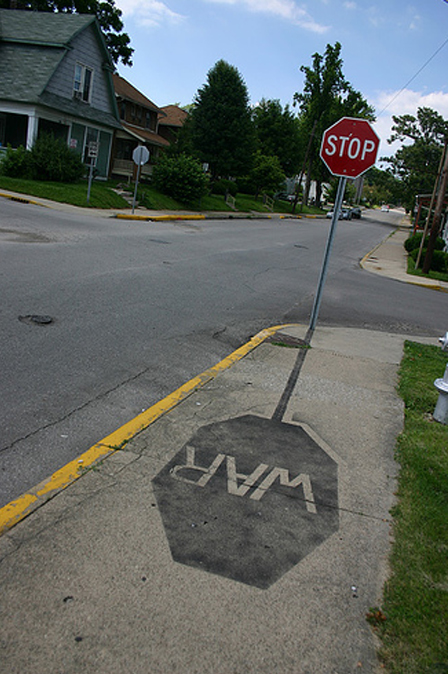
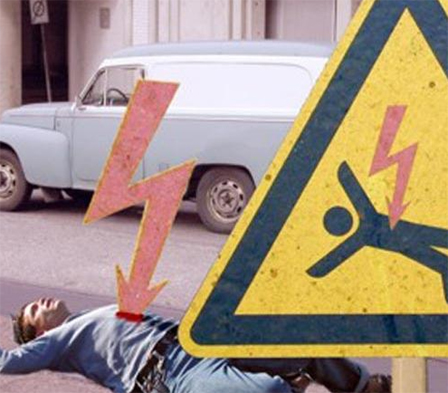
In my research of this topic I found a blog by a Turkish designer which made me laugh. Its opening is kind of relevant to this topic. Check it out; click here; plus there are a few other posts on there that are very good.


Sunday, September 5, 2010

week 6 - Tute

This weeks task is to look into who actually owns the information and content we put onto the web. I logged onto my facebook page and went straight to the terms at the bottom of the page and started reading. What I found was while I have control and ownership of the content, by putting it on the site I give facebook permission to use or share that content with who ever they want. But I can limit their use by changing the privacy settings on my site.

While I'm not a lawyer I'm not 100% on exactly what they can do with my content this did prompt me to go through and change all my privacy settings to limit the
amount of outside access I have have. It also reassured my decision when I first started my facebook account to only have "friends" that were actually friends that I knew in the real world. This decision came from my 'myspace' experience, where it seemed the goal was to have as many friends as possible regardless of the fact if I had ever met the person. So I deleted that site ending my friendship with over a thousand people I had never met and started with Facebook.

From this lecture while I will continue to use Facebook I will think about what I put up and definitely will not be putting any future art up that I want to retain full control over. Now I'm off to look into who owns my email accounts.

Week 6 - Lecture

This week introduced us to a new speaker, Adam Muir, all the way from Nathan... He talked about the history of the web and it's changes over the years; and the changes it has brought to the community and how the internet community has evolved.

I haven't been involved with the computers and internet all my life like some of the younger people in this class so it was interesting to see how peoples perspectives have changed towards the internet. And the change of the on-line community from groups with a common interest to an ego-centric network where it's all about who is linked to you.

With the change of the internet from just viewing content to the web 2.0 where it is a read-write web, meaning that users are involved in the creation of the content which raised the question as to who owns that content?

This was a very thought provoking topic for me as a budding designer the issue of content ownership will become an increasing issue for me. While right now I have no content that I have created as a graphic artist on the web I do have personal photos and information on facebook. From that topic I will be very conscious when I put content on the web.


Monday, August 23, 2010

Week 5 - Lecture

Ok, so it's week 5 and I think now I'm starting to get what I'm ment to be doing with this blog. Instead of giving a recap of the lecture or my view on the content, I'm ment to be researching the "tutespark" and showing what I find with a bit of a commentary on what I found...

This week we were introduced to culture jamming... This is what I have found out about culture jamming.

There was an incident in the USA in 1986 where a guy took over a t.v. broadcast for four minutes to protest his view on the stations new charges. Check out this youtube clip.


That was the beginning of cultural jamming, there were some copycat broadcast hackers which followed some got caught, some didn't; but now culture jamming is more about showing the propaganda which lies in advertising. It is usually done with a play on words or an adjustment to the image, using the original add in a slightly different way.


Pretty much culture jamming can be divided into 3 segments - Commercial, Political and Social. The above image is an example of commercial jamming using a Coca Cola add.


The image to the left is an example of political and the one above is social.

Monday, August 16, 2010

Week 4 - Tute

Tutorial week 4 = looking for more answers on the net...

This week we only have to track down 5 question, yay, so here they are.

1.Where and when did usable online video start? (provide some refs. and an example if possible)

Ok, so that was a youtube video, the very first to be exact. YouTube was the beginning of "usable" video online. While the company was created in Feb of 2005 this video was uploaded onto the site in April 2005. This video was of a guy called Jawed who is one of the co founders of YouTube... it's not an overly interesting video but it was the beginning.

2.In the lecture we heard about technological innovations that were used by the studios to lure audiences. (mostly to combat the popularity of TV) What recent innovations are being used to lure us in the movies? What are they luring us from?
In researching this topic I found a newspaper article on the Australian about film studios making their movie releases to DVD and VOD (video on demand) at the same time. In an attempt to reduce the piracy of DVD making the access of the movie easier so consumers don't have to wait for the movie to appear on pay t.v. Pretty much it's bout getting the movies to the consumers sooner and easier with out the need to sell the right to a t.v. channel.

http://www.theaustralian.com.au/australian-it/dvd-online-movie-releases-in-sync/story-e6frganf-1111118251865

3.Are short films still being made? Why? Who pays for them to be made?

Yes short films are still being made.... I would have thought that was pretty obvious...

"Why?" For many reasons... I'll give you some examples; As a kind of pilot to get funding for a full feature film, to show the investors what the movie will be like; It is also a genre of film its self. A film maker can specialise in this type of film or use it to showcase their film making ability to get into feature length. In short the reasons why short films are made are a varied as the films them selves.

Once again there are many different financiers of short films... Independently financed by the film maker. Many state government have grants as well as the federal government. Or even large production companies will finance a short film... Once again the people who pay for short films to be made are just as varied as the films and for the reasons they are made


4.The term viral is thrown about adhoc but what does it mean in film/movie arena? Give some examples.
movies adapted for adverts - sent viral


5. Online video distribution isn't limited to the short film format. We are now starting to see television styled shows made solely for internet release (webisodes). Find an example of this style of content and discuss how viewing television content in this way can positively and negatively affect the viewer's experience.

So I have never herd the term "webisode" before... but I have watched t.v. shows on the net. For me it is about convenience. I work shift work and I can be at Uni a weird times, so getting a chance to watch my favorite shows, regularly, can be difficult.

When I looked into what a webisode was I found it to be pretty much just a t.v. show made and released for the internet. There have been standalone series, behind the scenes series, or side story or extra content to a conventional t.v. show.

One that I found was a webisode series that accompanies the show Heroes called "Going Postal" it has similar elements to it as the t.v. show and gives the audience all the extras like behind the scenes and photos to with it.

I think webisodes are positive for the viewer. They offer flexibility with viewing and offer an extra level to the shows that you love to watch, and with more televisions being able to access the internet through things like the xbox and apple t.v. it is only going to grow.... Now consumers are waiting for the industry to catch up with the technology and to find a way to make money from online and downloadable content.

Week 4 -Lecture

So this week it was all about cinema and it's history and out Tute spark is to track down 3 short films.

As a huge Tropfest fan I went straight to it's website to find some great short films; here are the 3 that I like from the Tropfest site.


I chose this first movie because it was shot entirely on a mobile phone. As we had done something similar afew weeks ago I thought it would be good to show some quality filming using a phone. The filming is impressive as the entire moving shows a guy walking extremely slowly (which was later sped up) to make the rest of the world look like it is rushing by him and he can't make a connection with anyone... So the technical aspect of the filming was a major part in the story telling.


I chose this move because I found it funny and a little bit of a commentary on the phenomena that is the viral You Tube video; and some peoples obsessed desire to be in the public eye.


From the title of this movie "Smoking will kill you" you would be mistaken for thinking it was about the harms of smoking. Ultimately it's about looking on the bright side. The main guy was a reasonably happy guy until all the negative things in his life were pointed out to him.

Wednesday, August 11, 2010

week3 - Lecture

So it only took 3 weeks for work to interrupt my Uni life. After working Sunday night until 1am I had every intention of making it to the Lecture at 10am... Unfortunately my body had other ideas and wanted to sleep, so I missed my first (and only) lecture. But luckily I can read the lecture notes online, but it's not the same as being there and seeing and hearing the presentation. From the notes it seems the lecture was a bit of a history lesson on computers and the internet.

Right so the Tute spark for this week is: to find at least 3 (three) examples of digital devices that are not electronic.

This task seems impossible because to me "digital" means the "1" & "0" system used by electronic devices. So then I thought of Morse Code... I thought that was a dead end because it is was primarily use via the telegraph, which used electricity. But then I found a site that said that Morse Code could be transmitted by light. This sent me on a search for old boat signals maybe sent by candle light, all I got from this search was more about Morse Code.

Maybe at the lecture there was an explanation as to what is actually ment by "digital" and "not electric". This Tute sparke left me confused and frustrated.