Thursday, October 21, 2010

ESSAY!

Online privacy concerns are as individual as people them selves. If you ask a person for their bank details they are more then likely to refuse to give them to you. However, with social network sites like Facebook, Myspace, and twitter, many people will put other personally identifiable information on the internet. While they will not post their bank details, they will post their phone number, address, employer and education. Other people will not even post the town in which they live or adjust their account settings to hide this information. This essay will examine online privacy focusing on the social network Facebook.


As state previously many different people will disclose differing levels of information on their Facebook accounts. But what makes a person disregard their own privacy to post personal information like their birthday, political views, home town and intimate photos? 'It is the need for popularity that is driving people to disclose more personal information on Facebook than they normally would.' (Hughes p.3) While revealing to much information can be risky from a safety standpoint, 'maintaining too much privacy can be socially limiting.' (Hughes p.3) The idea behind Facebook is to interact with other users, omitting some information may limit the users ability to interact with others on the site. For example if you do not post your birth date on your profile your friends will not be able to wish you a happy birthday. Or if you do not post the school you attended, old school friends may not be able to connect with you.


To encourage users to disclose their personal information Facebook includes a template for users to fill out their information when joining, 'this creates a “norm” regarding what specific information to disclose based on what others have disclosed.' (Hughes p.3) However it is not just static information that users are encouraged to share but current changes in their lives through the “status update”. This provides users with a constant stream of information about what other users are doing. 'In this way, popularity and disclosure become inextricably linked. People with a high need for popularity may indeed care about their privacy, but they may not be willing to sacrifice their popularity by implementing privacy controls.' (Hughes p.4)


Differing people may have different levels at which they wish to disclose their information. The personal information which you may not want to make public may still end up on Facebook. 'You may not disclose personal information, but your online friends and colleagues may do it for you' (Levak p.100) While you may choose not to disclose some information your actions may not be enough 'to protect your privacy in the interconnected world of the internet' (Levak p.100). The concern is that a user can upload photos of himself with a group of friends, without being required to ask the permission of those friends. (Brooks p16) This opens up the possibility for personal information which you did not want to be made public becoming so by someone else’s actions.


The ramifications of your information becoming public can vary depending on what the information is. A simple picture might display you in an embarrassing situation this may get you into trouble with your parents or partner; however if the photo shows you when you are working it could cost you your job. This also gives way to false or inaccurate information being placed on the site. 'Despite this, there is no mechanism, on Facebook at least, by which an aggrieved individual can protect his privacy by requiring the friend to take down' (Brooks p.16) the information. As it stands if information you do not want to become public, be it a photo, where you live or what school you went to, does get placed on the internet there is little that can be done to remove it. This makes it difficult for anyone who wishes to have a tight control over their personal information to do so as you can not control what others put on their page and no way of having it removed.


While this is a concern a study conducted at MIT has shown that it is the friends you are linked to and what information they provide about them selves that can reveal information about you. The study analysed 4000 Facebook profiles, including links to friends. From the study the researchers where able to predict, with a 78% accuracy , whether the profile belonged to a gay male. (Levak p.100) The information collected from a Facebook profile 'can form a distinctive social signature.' (Levak p.100) Therefore it doesn't matter if you or your friends do not post some information about your self, just by being linked to certain people can reveal information about you.


What makes online privacy such a contentious issue would be a combination of the above topics. First a person needs to weigh up how, and what, they value as private information, and whether this out-weighs their social desires for popularity. Then they need to monitor their friends actions with regard to their own information. Finally they need to consider who they are linked to as friends, because just from the people you are linked to can give statistically probable information about yourself.


Considering all that has been looked at here it maybe best for people who want to retain full control over their personal information to not participate in sites like Facebook. If they are going to participate on these sites it would be best to consider what information they want to make available and take action to limit what they do not want to make available to the world.


Bibliography

  • Brooks, Gary. 2007, 'Friends on Social Networks can be a Threat to your Privacy': New Media Age, pp.16

  • Fogel, J. and Nehmad, E. 2009, 'Internet Social Network Communication: Risk taking , Trust and Privacy Concerns': Computers in Human Behaviour, Vol 25, pp. 153-160

  • Gelman, Lauren 2009, 'Privacy, Free Speech, and “BlurryEdged” Social Networks': Boston College Law Review, Vol 50, pp.1315 – 1350

  • Hughes, D. 2009, 'Facebook Users Disregard own Privacy to be Popular': Privacy Journal, Vol 35, pp. 3 – 4

  • Levak, B. 2010, 'Online Privacy Vanishing': Newsletter on Intellectual Freedom, Vol 59, pp. 100 – 101

  • Nelson, S. Simek, J & Foltin, J. 2010, 'The Legal Implications of Social Networking, Vol 22, pp. 1 – 35

  • Strahilevitz, A. and Lior, J. 2005, 'A Social Network Theory of Privacy': University of Chicago Law Review, Vol 72, pp. 919 - 997

Sunday, October 3, 2010

Week 10 - Course Eval.

So after 10 weeks of this course how do I think it stacks up? Well the best thing about this course is each week there is a new and interesting topic to cover. Many of the topics were new to me and some not. I can definitely see that many of the topics will help later in my degree and further into my professional career.

I do have 3 things that I didn't like about the course:
1. The lectures should start on time... We are timetabled to start at 10am so the lecture should start at 10am not 10:15.This just eats into time that could be spent explaining a topic more. If people are late that is their own problem, and I'm sure the lectures can have their chat later in the office.

2. More organisation with regard to the tutorial tasks. The items like the 30 frame movie, cyberjamm and cyber punk were good tasks, but looking for the answer to a bunch of questions that had nothing to do with the course was a big waste of time. Speaking of a waste of time, sitting around in the class room while our tutor tried to find out what it is we were ment to be doing that week.

3. Better communication about what is expected in these blogs. It is pretty pointless to get feed back in week 9 about the first half of the posts when the second half are due in week 10. The marking criteria should have been available at the start of the semester so we knew what it is you are looking for and a better explanation of what is expected.

I understand that this course is more relaxed then some others but you can still be relaxed and have organisation. Especially considering this is a large class communication needs to be spot on so all 300 of us are on the same page. In all I did enjoy the content of the course I think with some refinement of the tutorial tasks and the other points above will make the course a lot better.

Monday, September 20, 2010

Week 9 -Tute

After reading through the list of questions we have to choose for our essay I have decided to go with question 6 -
Increasingly mobile devices are an aid to the gathering and reporting of information, both by professional journalists and “citizen journalists”. Outline the advantages and disadvantages of this sort of news gathering. How might it impact on journalistic practices and news values and ethics?
The reason I chose this question pretty much came down to the tute exercise. I really enjoyed the process of making our own news story and find the concept of citizen journalism interesting.

My plan of attack on this question will be to find some examples of citizen journalism, both positive and negative. I'll also look for some journal articles and credible online sources that can support the positive and negative arguments.

A possible problem I see my self having is the word limit. This is a very involved question with a lot of areas to cover. I'll need to keep my arguments to the point and make every work count.

Well this is the last post for a week while we have semester break.... And let me tell you, it is long overdue!!

Week 9 - Lecture

This weeks lecture topic was Cyberpunk... which would have been better to have last week... considering the tute exercise we had. But anywho I get over that.

Once again Daniel opened me up to another interesting topic. Thankfully this week was much easier to follow compared to last week. Daniel manage to explain a bit about cyberpunk and were it all began. Cyberpunk's common theme or tone is the dark seedy side of humanity; lust for something and capital, which is street cred or as Daniel put it cold, hard mother f#$%ing money.

Daniel also talked about William Gibson, who is a leading writer on cyberpunk. We watched some clips of him and his work at the end of one William mentioned Gabriel's hounds, Daniel asked if anyone knew what he was talking about... No one did so he left it to us to find out.

What I found was either it is a reference to a band or a pack of hounds lead by the Angel Gabriel. I think it was a reference to the later. The hounds are ment to fly across the sky and bring ill fortune and death to anyone who hears them. So they are a kind of dooms day, end of normality kind of thing, which is a theme of cyberpunk.

With the semester break coming up I think I'll hunt down one of William Gibson's books down and see if it's all that Daniel made it out to be.

Thursday, September 16, 2010

Week 8 - Tute

For this weeks tutorial task we were asked to research a cyberpunk theme, find a creative piece that reflects that theme; then link the two to a current news story. We then had to re-write the news story to include the cyberpunk piece showing it as a prediction of what is occurring now.

I chose the theme of "corporate control over society", which is basically the oppression of a larger group or society by another, either a corporation or government. The creative piece I used was a 1995 movie called "Hackers", it tells a story of a group of hackers who are being framed by a oil company for causing a oil spill. The group of hacker try to revel the truth that the company is causing the spill them selves to cover up the millions of dollars that have gone "missing".

I found an article on the ABC news site about the Rio Tinto executive who was arrested for stealing secret competitor information and the link with the Chinese governments involvement in hacking international companies to gain secret information and also to frame company employees.

My edited news
story is below.... I'm off now to go update my laptops firewall before I fall victim to something like this....

Rio hacked at time of Hu arrest

Rio Tinto has been attacked by computer hackers, in what experts say is a growing global problem.

Rio Tinto's computer network was attacked by hackers around the time of Stern Hu's arrest, the ABC's Four Corners program has revealed.

Rio Tinto declined to comment on the incident, but former Rio employees and a senior government source have confirmed the company's Singapore office was taken off-line for three days to upgrade its security.

Senior mining executives also told the program that fellow mining giant, Fortescue Metals, was targeted by cyber attackers.

The Chinese embassy has denied any government involvement in the attacks.

But international security expert Professor Alan Dupont says there is increasing evidence that China practices commercial espionage.

"I think China, in particular, has seen opportunities to gain competitive advantage commercially through accessing commercial secrets," he said.

"I think that's become now part of a conscious strategic policy by China to improve its competitive position in all those fields."

“I think that's becoming now part of a conscious strategic policy by China to use hackers to steal commercial secrets from international companies”

Former CIA case officer Daniel Slane told the program there had been many cases of hackers stealing commercial secrets from US companies.

And he said there was a lot of forensic evidence that pointed to the culprits being based in China.

Former CIA case officer Daniel Slane told the program this was a bigger issue then most people are aware.

"We believe that numerous corporations have been attacked, not only in the United States, but worldwide, and many of them are even unaware that they're being attacked," he said.

In a bid to shift the focus from the Chinese government they are using their hackers to place false evidence onto the computers of innocent parties. Reminiscent of the 1995 film Hakers where a large corporation uses the cyber word to frame a group of people for an illegal act committed by the corporation.

However in the present day it is not a corporation but a government which is using the cyber world against innocent people.

It is easy for China to use government hackers to steal information from an international corporation and even place incriminating evidence onto the computers of the employees of the company; which looks to be the case in Sturn Hu’s situation.

Computer security expert Ajoy Ghosh said hackers in other cases had gone as far as planting child pornography on victims' computers so that authorities had a reason to seize the computer.

"They can also insert files on to the travelling executive's computer and a common thing to do is to insert compromising material, perhaps it's a photo of that executive in a compromising position. Perhaps it's child pornography.

"Increasingly, there's a recognition that national security agencies and hackers for hire are being used to gather economic information."

With institutions like the Chinese government undertaking these acts we are in for a very uncertain future where our safety is not guaranteed and the information on our computers may not be our own.

"So once you've infected the computer the hacker has full access to that computer. So the first thing they can do is to browse files on that computer. They can copy the files from that computer to their own computer," he said.

"They can also insert files on to the travelling executive's computer and a common thing to do is to insert compromising material, perhaps it's a photo of that executive in a compromising position. Perhaps it's child pornography.

"Inserting child pornography has the benefit that later on the authorities can come knocking on the door and seize the computer legitimately because it has child pornography on it."

Mr Ghosh said hacking was increasingly becoming big business.

"There are multiple reasons that your computer might be compromised," he said.

"Increasingly, there's a recognition that national security agencies and hackers for hire are being used to gather economic information."

Editor's Note (May 11, 2010): A portion of the article claiming that Chemical Abstracts Services' (CAS) computer system had been breached by Chinese hackers has been removed. After the broadcast of Four Corners CAS told ABC this was untrue. They told us that several university systems with access to the online research tool SciFinder were hacked but at no time was the IT security system at CAS breached.


Week 8 - Lecture

Ok... so that was a little full on to say the least.... Covering 2000yrs of information in 40min was hard for my brain. Starting with Plato and his philosophical ideas, through to electrodes in the brains of monkeys. Yes it was all covered.... What I took away from the lecture was to question reality. What makes something real? Does virtual reality make what is being displayed real because we can see it?

While I was extremely engrossed with what was being said I think more time is need to full explain the theories and allow it to sink in. Hopefully some of the topics will be built on in the weeks to come.

To get a bit more of an idea of what was covered in the lecture I did a search online on the topic of reality and virtual reality. Some... most of what I found was useless but one page stuck with me.... While I'm not 100% on the credibility of the author "Ken Ward", he does talk about some stuff I remember from when I was doing a science degree in Canberra. This particular page talks about the fact that the way we see and how we interpret that information is dependent on chemical and electrical reactions in the brain. The easiest way to think about it is most people see grass as green, but a person with colour blindness sees it as brown... so what we perceive to be reality may not be what others would call reality.

Well that's a little full on so I'll leave it there.

Tuesday, September 7, 2010

Week 7 - Tute

So this weeks tute is researching some topics and discussing what I find. Here I go....

1. What is creative commons and how could this licensing framework be relevant to your own experience at university?
Creative Commons was introduced to us in the lecture, I had never herd of it before but I like the sound of it. I think while copyrights have their place in protecting a persons creative works. There are situations where the rigidity of the copyright doesn't allow for current uses of works. I got this quote from the Creative Commons website to help explain;

"Creative Commons is a world wide project that encourages copyright owners to allow others to share, reuse and remix their material, legally. We offer a range of free licences that creators can use to manage their copyright in the online environment, each providing its own specific protections and freedoms. We have built upon the “all rights reserved” of traditional copyright to create a voluntary “some rights reserved” system."

While I don't think Universities would accept some works from other artists even under a creative common license, there could be a way for it to work. Just as with an essay you provide a bibliography, if you where to create art or music with creative common work you could provide a reference to the original piece and the creator....

This may not be a area that I use a lot of academically but it will definitely by something I'll be using personally and professionally.

2. Find 3 examples of works created by creative commons and embed them in your blog.
This question I had a bit of trouble with. I found it easy to get creative commons licensed work, many search engines now provide a "creative commons" option and sites like flickr have heaps of examples. However I found it difficult to find a creative work which was made from the use of creative common licensed work.

3. Find an academic article which discusses creative commons using a database or online journal. Provide a link to and a summary of the article.

I found this article called "Made for Sharing" by Eliza Williams it gave an overview of creative commons and it's beginnings as well as the benefits and pitfalls of the licenses. I have provided a link to the full article and bellow is an abstract.

Abstract:
"AB The Creative Commons company has created a system of alternative copyright licenses. The company was formed in 2001 by a group of cyberlaw and intellectual property experts, an MIT computer science professor, and an Internet publisher. According to co-founder Lawrence Lossig, the company is attempting to generalize the free cultural production approach of the computer software movement. Its licenses aim to provide an alternative copyright system that is more in line with the sharing ethos of the Internet and the creative possibilities of digital technology. For example, the Attribution license allows others to use a person's work as long as that person is credited as the creator. "


4. Have a look at Portable Apps (a pc based application) – provide a brief description of what it is and how you think this is useful.

This is another new topic for me "portable apps". A quick search showed me that they are pretty much a program that doesn't store information on the computers hardware. I found this awesome site called gizmo's freeware review which has a whole heap of portable apps. and some info explaining what they are for the uninitiated like me. The benefit that I see of these types of programs is that you don't need to have it installed onto the computer so you can use it where ever you go, internet cafe, uni, friends place.

Monday, September 6, 2010

Week 7 - Lecture

Once again we had Adam which I really enjoyed. His lecture topics are really interesting to me. This weeks topic was all about sharing knowledge and building on previous works or ideas. Before the advent of Lawyers and capitalism knowledge was freely distributed in the community and available for anyone to use, expand on and even change. At the moment the norm is to keep control of all the content you create and protect it from use by others.

While I see the point to this kind of protection, the concept that we were introduced to this week of 'creative commons' is a great compliment to the existing copyright laws. Creative Commons is another type of copyright, just a more relaxed version. Instead of the creator retaining all rights over a piece they can choose how much of their rights they wish to release; allowing it to be used by other creators to use to make their own works, or to build on the original.

Adam also talked about open source software and asked us to look into some and try to use one for a week and judge if it better or worse. This is an area that I have been getting more and more familiar with. I love my iMac and adobe programs and doubt that I'll ever change from that, especially with the industry focus on these. However I do already use open source programs on my laptop. The ones I use most are Firefox and Openoffice.

Firefox is a free web browser, I use it because I find it to run smoother with less glitches then explorer and I refuse to use chrome out of principle because of Google. OpenOffice is a free word processor, very similar to Microsoft's version but you don't have to empty your wallet every time there is an new version update.
I like Openoffice awesome, I can do everything Word or iWork does; while it's not as refined it does get the job done.

In my research of this topic I found a blog by a Turkish designer which made me laugh. Its opening is kind of relevant to this topic. Check it out; click here; plus there are a few other posts on there that are very good.


Sunday, September 5, 2010

week 6 - Tute

This weeks task is to look into who actually owns the information and content we put onto the web. I logged onto my facebook page and went straight to the terms at the bottom of the page and started reading. What I found was while I have control and ownership of the content, by putting it on the site I give facebook permission to use or share that content with who ever they want. But I can limit their use by changing the privacy settings on my site.

While I'm not a lawyer I'm not 100% on exactly what they can do with my content this did prompt me to go through and change all my privacy settings to limit the
amount of outside access I have have. It also reassured my decision when I first started my facebook account to only have "friends" that were actually friends that I knew in the real world. This decision came from my 'myspace' experience, where it seemed the goal was to have as many friends as possible regardless of the fact if I had ever met the person. So I deleted that site ending my friendship with over a thousand people I had never met and started with Facebook.

From this lecture while I will continue to use Facebook I will think about what I put up and definitely will not be putting any future art up that I want to retain full control over. Now I'm off to look into who owns my email accounts.

Week 6 - Lecture

This week introduced us to a new speaker, Adam Muir, all the way from Nathan... He talked about the history of the web and it's changes over the years; and the changes it has brought to the community and how the internet community has evolved.

I haven't been involved with the computers and internet all my life like some of the younger people in this class so it was interesting to see how peoples perspectives have changed towards the internet. And the change of the on-line community from groups with a common interest to an ego-centric network where it's all about who is linked to you.

With the change of the internet from just viewing content to the web 2.0 where it is a read-write web, meaning that users are involved in the creation of the content which raised the question as to who owns that content?

This was a very thought provoking topic for me as a budding designer the issue of content ownership will become an increasing issue for me. While right now I have no content that I have created as a graphic artist on the web I do have personal photos and information on facebook. From that topic I will be very conscious when I put content on the web.


Monday, August 23, 2010

Week 5 - Lecture

Ok, so it's week 5 and I think now I'm starting to get what I'm ment to be doing with this blog. Instead of giving a recap of the lecture or my view on the content, I'm ment to be researching the "tutespark" and showing what I find with a bit of a commentary on what I found...

This week we were introduced to culture jamming... This is what I have found out about culture jamming.

There was an incident in the USA in 1986 where a guy took over a t.v. broadcast for four minutes to protest his view on the stations new charges. Check out this youtube clip.


That was the beginning of cultural jamming, there were some copycat broadcast hackers which followed some got caught, some didn't; but now culture jamming is more about showing the propaganda which lies in advertising. It is usually done with a play on words or an adjustment to the image, using the original add in a slightly different way.


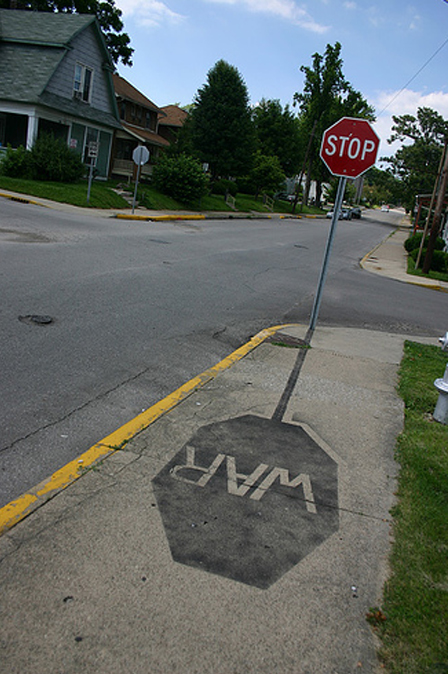
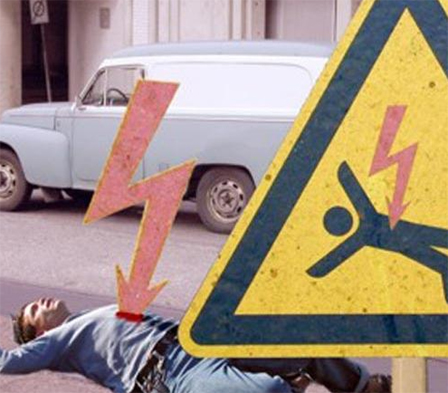
Pretty much culture jamming can be divided into 3 segments - Commercial, Political and Social. The above image is an example of commercial jamming using a Coca Cola add.


The image to the left is an example of political and the one above is social.

Monday, August 16, 2010

Week 4 - Tute

Tutorial week 4 = looking for more answers on the net...

This week we only have to track down 5 question, yay, so here they are.

1.Where and when did usable online video start? (provide some refs. and an example if possible)

Ok, so that was a youtube video, the very first to be exact. YouTube was the beginning of "usable" video online. While the company was created in Feb of 2005 this video was uploaded onto the site in April 2005. This video was of a guy called Jawed who is one of the co founders of YouTube... it's not an overly interesting video but it was the beginning.

2.In the lecture we heard about technological innovations that were used by the studios to lure audiences. (mostly to combat the popularity of TV) What recent innovations are being used to lure us in the movies? What are they luring us from?
In researching this topic I found a newspaper article on the Australian about film studios making their movie releases to DVD and VOD (video on demand) at the same time. In an attempt to reduce the piracy of DVD making the access of the movie easier so consumers don't have to wait for the movie to appear on pay t.v. Pretty much it's bout getting the movies to the consumers sooner and easier with out the need to sell the right to a t.v. channel.

http://www.theaustralian.com.au/australian-it/dvd-online-movie-releases-in-sync/story-e6frganf-1111118251865

3.Are short films still being made? Why? Who pays for them to be made?

Yes short films are still being made.... I would have thought that was pretty obvious...

"Why?" For many reasons... I'll give you some examples; As a kind of pilot to get funding for a full feature film, to show the investors what the movie will be like; It is also a genre of film its self. A film maker can specialise in this type of film or use it to showcase their film making ability to get into feature length. In short the reasons why short films are made are a varied as the films them selves.

Once again there are many different financiers of short films... Independently financed by the film maker. Many state government have grants as well as the federal government. Or even large production companies will finance a short film... Once again the people who pay for short films to be made are just as varied as the films and for the reasons they are made


4.The term viral is thrown about adhoc but what does it mean in film/movie arena? Give some examples.
movies adapted for adverts - sent viral


5. Online video distribution isn't limited to the short film format. We are now starting to see television styled shows made solely for internet release (webisodes). Find an example of this style of content and discuss how viewing television content in this way can positively and negatively affect the viewer's experience.

So I have never herd the term "webisode" before... but I have watched t.v. shows on the net. For me it is about convenience. I work shift work and I can be at Uni a weird times, so getting a chance to watch my favorite shows, regularly, can be difficult.

When I looked into what a webisode was I found it to be pretty much just a t.v. show made and released for the internet. There have been standalone series, behind the scenes series, or side story or extra content to a conventional t.v. show.

One that I found was a webisode series that accompanies the show Heroes called "Going Postal" it has similar elements to it as the t.v. show and gives the audience all the extras like behind the scenes and photos to with it.

I think webisodes are positive for the viewer. They offer flexibility with viewing and offer an extra level to the shows that you love to watch, and with more televisions being able to access the internet through things like the xbox and apple t.v. it is only going to grow.... Now consumers are waiting for the industry to catch up with the technology and to find a way to make money from online and downloadable content.

Week 4 -Lecture

So this week it was all about cinema and it's history and out Tute spark is to track down 3 short films.

As a huge Tropfest fan I went straight to it's website to find some great short films; here are the 3 that I like from the Tropfest site.


I chose this first movie because it was shot entirely on a mobile phone. As we had done something similar afew weeks ago I thought it would be good to show some quality filming using a phone. The filming is impressive as the entire moving shows a guy walking extremely slowly (which was later sped up) to make the rest of the world look like it is rushing by him and he can't make a connection with anyone... So the technical aspect of the filming was a major part in the story telling.


I chose this move because I found it funny and a little bit of a commentary on the phenomena that is the viral You Tube video; and some peoples obsessed desire to be in the public eye.


From the title of this movie "Smoking will kill you" you would be mistaken for thinking it was about the harms of smoking. Ultimately it's about looking on the bright side. The main guy was a reasonably happy guy until all the negative things in his life were pointed out to him.

Wednesday, August 11, 2010

week3 - Lecture

So it only took 3 weeks for work to interrupt my Uni life. After working Sunday night until 1am I had every intention of making it to the Lecture at 10am... Unfortunately my body had other ideas and wanted to sleep, so I missed my first (and only) lecture. But luckily I can read the lecture notes online, but it's not the same as being there and seeing and hearing the presentation. From the notes it seems the lecture was a bit of a history lesson on computers and the internet.

Right so the Tute spark for this week is: to find at least 3 (three) examples of digital devices that are not electronic.

This task seems impossible because to me "digital" means the "1" & "0" system used by electronic devices. So then I thought of Morse Code... I thought that was a dead end because it is was primarily use via the telegraph, which used electricity. But then I found a site that said that Morse Code could be transmitted by light. This sent me on a search for old boat signals maybe sent by candle light, all I got from this search was more about Morse Code.

Maybe at the lecture there was an explanation as to what is actually ment by "digital" and "not electric". This Tute sparke left me confused and frustrated.

Monday, August 9, 2010

Week 3 - Tute

So for this weeks tute I have to find the answer to some questions without the use of google or wikipedia, not to hard... I hope, here I go:

Question:
1. What is the weight of the world’s biggest machine? How much did it cost to build?

What I found was the biggest machine is a rotating shovel called the 'Bagger 288' built in Germany in 1998 at a cost of $100 million and weighing in at 45 500 ton. Now that's big!

sites accessed 10/08/2010
http://www.wonderhowto.com/wonderment/worlds-biggest-machine-0113869/
www.swapmeetdave.com/Humor/Workshop/Trencher.htm
www.youtube.com/watch?v=GF-c5Tn-Xhk

2. What is the best way (quickest, most reliable) to contact Ozzy Osborne?

For this question I went all Gen Y and looked Ozzy up on twitter.
(http://twitter.com/OfficialOzzy, 10/08/2010)

3. When and what was the first example of global digital communication?


4. What is the cheapest form of travel from the Gold Coast to Melbourne?

I found this question super easy. I'm a pro when it comes to cheap travel! I have managed to travel quite a bit around the globe and never use a travel agent. Anywho I found the cheapest one way ticket was with Tiger Airways leaving Wednesday at 9.45pm at $58.95.
(http://booking.tigerairways.com/skylights/cgi-bin/skylights.cgi, 10/08/2010)

5. Who is Hatsune Miku? What company does she belong to? What is her birthday?

Okay, this one was a little difficult. I found that Hatsune Miku is a vocaloid which is a program developed by Yamaha in Japan to synthesize the vocals in a song. With Japans obsession with anime Hatsune Miku has taken on a full persona and cult following. Despite this the birth date was the hardest to find but I did. According to one site I found Hatsune Miku's birthday is the 31th August (2007) but I also found the the release date for Hatsune Miku was the 17th August 2007.


(
http://kyourankyodai.com/2009/08/31/happy-2nd-birthday-hatsune-miku-san/, http://knowyourmeme.com/memes/miku-hatsune-vocaloid, 10/08/2010)

6. Find a live webcam in Antarctica. Find a place to stay in Antarctica.

You would think this would be hard to find being such an inhospitable place but no. The Australian government and many other governments have stations in Antarctica all with webcams. The Australian Antarctic Devision website has links to each of their stations and the webcams at these stations.

There are no Hotels at Antarctica but there are plenty of travel companies that can take tourist there with accommodation on a boat. One site that I looked at is Antarctica Cruises and Tours which offer a range of tours to Antarctica.

Sites visited 10/08/2010
http://www.aad.gov.au/asset/webcams/casey/default.asp
http://www.aad.gov.au/asset/webcams/mawson/default.asp
http://www.aad.gov.au/asset/webcams/davis/default.asp
http://www.adventure-life.com/cruises/antarctica-cruises/

7. What song was top of the Australian pop charts this week in 1980?
This question I found to be difficult. What I did find is that the ARIA charts, which is the current body who compiles this information only goes back as far as 1988. So no luck there. I did find some books and thought I was going to get the answer but then found out I would have to buy these books, sorry but I don't need to know the answer that bad.... If it wasn't for the word "Australia" in the question it would have been easy.

It took me about 5 second to find the number 1 for the USA this week in 1980 - It was Olivia Newton-John with Magic thank to the Billboard magazine.
(http://www.joshhosler.biz/numberoneinhistory/08/0810.htm, http://www.ariacharts.com.au/, 10/08/2010)


8. How would you define the term 'nano technology'? In your own words, what does it really mean?
Before I looked up this question I had a bit of an idea what nano technology is, well at least I thought so. Turns out that nano technology is much smaller and used more widely then I first thought. Originally I thought it was used in electronics with research into applications in medicine, but it is used in everyday items to make lighter, stronger and more durable. 'Nanotechnology is the understanding and control of matter at dimensions between approximately 1 and 100 nanometers'. To put that into persective a sheet of paper is 100 000 nanometers thick.

(http://www.nano.gov/, 10/08/2010)

9. What type of camera is used to make ‘Google Street View’?

To create street view Google used an eleven lens
Dodeca 2360 camera which was attached to the roof of a car that captured images in every direction as they drove their cars around the world.
(http://www.ehow.com/how-does_5114117_google-make-street-maps.html, http://www.ehow.com/facts_5295795_google-create-street.html, http://www.immersivemedia.com/products/capture.html, 10/08/2010)

10. Translate these questions into Klingon.

Well it would be an over statement if I said this question was fun to look up.... I mean Klingon.... really? Yes this it a tech course and I like sci-fi movies, but Klingon isn't a language no matter how many conventions you go to or how many chat rooms you go on, it will never be spoken at the UN.
Disspite my aversion to this question I managed to track something down, a site called 'Mr Klingon'. Here are a few questions translated.
1. nuq 'oH vo' chay' 'ar ta'ta' 'oH Daq chen
2. nuq 'oH HochHom Daq (I don't think it know how to translate "Ozzy Osborne
3. ghorgh 'ej nuq ghaHta' wa'DIch vo'

(http://www.mrklingon.org/, 10/08/2010)