Monday, August 23, 2010

Week 5 - Lecture

Ok, so it's week 5 and I think now I'm starting to get what I'm ment to be doing with this blog. Instead of giving a recap of the lecture or my view on the content, I'm ment to be researching the "tutespark" and showing what I find with a bit of a commentary on what I found...

This week we were introduced to culture jamming... This is what I have found out about culture jamming.

There was an incident in the USA in 1986 where a guy took over a t.v. broadcast for four minutes to protest his view on the stations new charges. Check out this youtube clip.


That was the beginning of cultural jamming, there were some copycat broadcast hackers which followed some got caught, some didn't; but now culture jamming is more about showing the propaganda which lies in advertising. It is usually done with a play on words or an adjustment to the image, using the original add in a slightly different way.


Pretty much culture jamming can be divided into 3 segments - Commercial, Political and Social. The above image is an example of commercial jamming using a Coca Cola add.
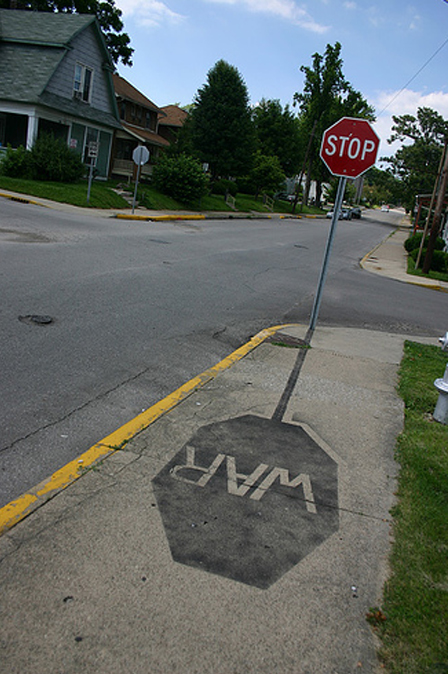
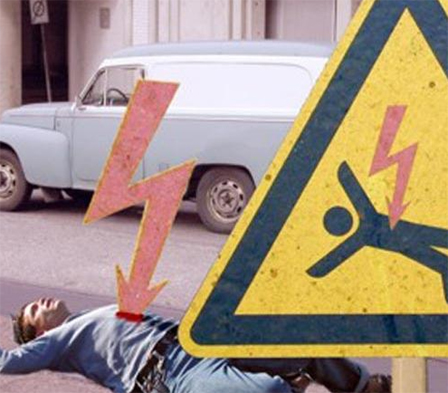


The image to the left is an example of political and the one above is social.

Monday, August 16, 2010

Week 4 - Tute

Tutorial week 4 = looking for more answers on the net...

This week we only have to track down 5 question, yay, so here they are.

1.Where and when did usable online video start? (provide some refs. and an example if possible)

Ok, so that was a youtube video, the very first to be exact. YouTube was the beginning of "usable" video online. While the company was created in Feb of 2005 this video was uploaded onto the site in April 2005. This video was of a guy called Jawed who is one of the co founders of YouTube... it's not an overly interesting video but it was the beginning.

2.In the lecture we heard about technological innovations that were used by the studios to lure audiences. (mostly to combat the popularity of TV) What recent innovations are being used to lure us in the movies? What are they luring us from?
In researching this topic I found a newspaper article on the Australian about film studios making their movie releases to DVD and VOD (video on demand) at the same time. In an attempt to reduce the piracy of DVD making the access of the movie easier so consumers don't have to wait for the movie to appear on pay t.v. Pretty much it's bout getting the movies to the consumers sooner and easier with out the need to sell the right to a t.v. channel.

http://www.theaustralian.com.au/australian-it/dvd-online-movie-releases-in-sync/story-e6frganf-1111118251865

3.Are short films still being made? Why? Who pays for them to be made?

Yes short films are still being made.... I would have thought that was pretty obvious...

"Why?" For many reasons... I'll give you some examples; As a kind of pilot to get funding for a full feature film, to show the investors what the movie will be like; It is also a genre of film its self. A film maker can specialise in this type of film or use it to showcase their film making ability to get into feature length. In short the reasons why short films are made are a varied as the films them selves.

Once again there are many different financiers of short films... Independently financed by the film maker. Many state government have grants as well as the federal government. Or even large production companies will finance a short film... Once again the people who pay for short films to be made are just as varied as the films and for the reasons they are made


4.The term viral is thrown about adhoc but what does it mean in film/movie arena? Give some examples.
movies adapted for adverts - sent viral


5. Online video distribution isn't limited to the short film format. We are now starting to see television styled shows made solely for internet release (webisodes). Find an example of this style of content and discuss how viewing television content in this way can positively and negatively affect the viewer's experience.

So I have never herd the term "webisode" before... but I have watched t.v. shows on the net. For me it is about convenience. I work shift work and I can be at Uni a weird times, so getting a chance to watch my favorite shows, regularly, can be difficult.

When I looked into what a webisode was I found it to be pretty much just a t.v. show made and released for the internet. There have been standalone series, behind the scenes series, or side story or extra content to a conventional t.v. show.

One that I found was a webisode series that accompanies the show Heroes called "Going Postal" it has similar elements to it as the t.v. show and gives the audience all the extras like behind the scenes and photos to with it.

I think webisodes are positive for the viewer. They offer flexibility with viewing and offer an extra level to the shows that you love to watch, and with more televisions being able to access the internet through things like the xbox and apple t.v. it is only going to grow.... Now consumers are waiting for the industry to catch up with the technology and to find a way to make money from online and downloadable content.

Week 4 -Lecture

So this week it was all about cinema and it's history and out Tute spark is to track down 3 short films.

As a huge Tropfest fan I went straight to it's website to find some great short films; here are the 3 that I like from the Tropfest site.


I chose this first movie because it was shot entirely on a mobile phone. As we had done something similar afew weeks ago I thought it would be good to show some quality filming using a phone. The filming is impressive as the entire moving shows a guy walking extremely slowly (which was later sped up) to make the rest of the world look like it is rushing by him and he can't make a connection with anyone... So the technical aspect of the filming was a major part in the story telling.


I chose this move because I found it funny and a little bit of a commentary on the phenomena that is the viral You Tube video; and some peoples obsessed desire to be in the public eye.


From the title of this movie "Smoking will kill you" you would be mistaken for thinking it was about the harms of smoking. Ultimately it's about looking on the bright side. The main guy was a reasonably happy guy until all the negative things in his life were pointed out to him.

Wednesday, August 11, 2010

week3 - Lecture

So it only took 3 weeks for work to interrupt my Uni life. After working Sunday night until 1am I had every intention of making it to the Lecture at 10am... Unfortunately my body had other ideas and wanted to sleep, so I missed my first (and only) lecture. But luckily I can read the lecture notes online, but it's not the same as being there and seeing and hearing the presentation. From the notes it seems the lecture was a bit of a history lesson on computers and the internet.

Right so the Tute spark for this week is: to find at least 3 (three) examples of digital devices that are not electronic.

This task seems impossible because to me "digital" means the "1" & "0" system used by electronic devices. So then I thought of Morse Code... I thought that was a dead end because it is was primarily use via the telegraph, which used electricity. But then I found a site that said that Morse Code could be transmitted by light. This sent me on a search for old boat signals maybe sent by candle light, all I got from this search was more about Morse Code.

Maybe at the lecture there was an explanation as to what is actually ment by "digital" and "not electric". This Tute sparke left me confused and frustrated.

Monday, August 9, 2010

Week 3 - Tute

So for this weeks tute I have to find the answer to some questions without the use of google or wikipedia, not to hard... I hope, here I go:

Question:
1. What is the weight of the world’s biggest machine? How much did it cost to build?

What I found was the biggest machine is a rotating shovel called the 'Bagger 288' built in Germany in 1998 at a cost of $100 million and weighing in at 45 500 ton. Now that's big!

sites accessed 10/08/2010
http://www.wonderhowto.com/wonderment/worlds-biggest-machine-0113869/
www.swapmeetdave.com/Humor/Workshop/Trencher.htm
www.youtube.com/watch?v=GF-c5Tn-Xhk

2. What is the best way (quickest, most reliable) to contact Ozzy Osborne?

For this question I went all Gen Y and looked Ozzy up on twitter.
(http://twitter.com/OfficialOzzy, 10/08/2010)

3. When and what was the first example of global digital communication?


4. What is the cheapest form of travel from the Gold Coast to Melbourne?

I found this question super easy. I'm a pro when it comes to cheap travel! I have managed to travel quite a bit around the globe and never use a travel agent. Anywho I found the cheapest one way ticket was with Tiger Airways leaving Wednesday at 9.45pm at $58.95.
(http://booking.tigerairways.com/skylights/cgi-bin/skylights.cgi, 10/08/2010)

5. Who is Hatsune Miku? What company does she belong to? What is her birthday?

Okay, this one was a little difficult. I found that Hatsune Miku is a vocaloid which is a program developed by Yamaha in Japan to synthesize the vocals in a song. With Japans obsession with anime Hatsune Miku has taken on a full persona and cult following. Despite this the birth date was the hardest to find but I did. According to one site I found Hatsune Miku's birthday is the 31th August (2007) but I also found the the release date for Hatsune Miku was the 17th August 2007.


(
http://kyourankyodai.com/2009/08/31/happy-2nd-birthday-hatsune-miku-san/, http://knowyourmeme.com/memes/miku-hatsune-vocaloid, 10/08/2010)

6. Find a live webcam in Antarctica. Find a place to stay in Antarctica.

You would think this would be hard to find being such an inhospitable place but no. The Australian government and many other governments have stations in Antarctica all with webcams. The Australian Antarctic Devision website has links to each of their stations and the webcams at these stations.

There are no Hotels at Antarctica but there are plenty of travel companies that can take tourist there with accommodation on a boat. One site that I looked at is Antarctica Cruises and Tours which offer a range of tours to Antarctica.

Sites visited 10/08/2010
http://www.aad.gov.au/asset/webcams/casey/default.asp
http://www.aad.gov.au/asset/webcams/mawson/default.asp
http://www.aad.gov.au/asset/webcams/davis/default.asp
http://www.adventure-life.com/cruises/antarctica-cruises/

7. What song was top of the Australian pop charts this week in 1980?
This question I found to be difficult. What I did find is that the ARIA charts, which is the current body who compiles this information only goes back as far as 1988. So no luck there. I did find some books and thought I was going to get the answer but then found out I would have to buy these books, sorry but I don't need to know the answer that bad.... If it wasn't for the word "Australia" in the question it would have been easy.

It took me about 5 second to find the number 1 for the USA this week in 1980 - It was Olivia Newton-John with Magic thank to the Billboard magazine.
(http://www.joshhosler.biz/numberoneinhistory/08/0810.htm, http://www.ariacharts.com.au/, 10/08/2010)


8. How would you define the term 'nano technology'? In your own words, what does it really mean?
Before I looked up this question I had a bit of an idea what nano technology is, well at least I thought so. Turns out that nano technology is much smaller and used more widely then I first thought. Originally I thought it was used in electronics with research into applications in medicine, but it is used in everyday items to make lighter, stronger and more durable. 'Nanotechnology is the understanding and control of matter at dimensions between approximately 1 and 100 nanometers'. To put that into persective a sheet of paper is 100 000 nanometers thick.

(http://www.nano.gov/, 10/08/2010)

9. What type of camera is used to make ‘Google Street View’?

To create street view Google used an eleven lens
Dodeca 2360 camera which was attached to the roof of a car that captured images in every direction as they drove their cars around the world.
(http://www.ehow.com/how-does_5114117_google-make-street-maps.html, http://www.ehow.com/facts_5295795_google-create-street.html, http://www.immersivemedia.com/products/capture.html, 10/08/2010)

10. Translate these questions into Klingon.

Well it would be an over statement if I said this question was fun to look up.... I mean Klingon.... really? Yes this it a tech course and I like sci-fi movies, but Klingon isn't a language no matter how many conventions you go to or how many chat rooms you go on, it will never be spoken at the UN.
Disspite my aversion to this question I managed to track something down, a site called 'Mr Klingon'. Here are a few questions translated.
1. nuq 'oH vo' chay' 'ar ta'ta' 'oH Daq chen
2. nuq 'oH HochHom Daq (I don't think it know how to translate "Ozzy Osborne
3. ghorgh 'ej nuq ghaHta' wa'DIch vo'

(http://www.mrklingon.org/, 10/08/2010)


Tuesday, August 3, 2010

Week 2 - Tute

Well what can I say about the tute this week? It was freaking awesome!! I am so glad I am doing a creative degree this time instead of the Business degree I started years ago. This weeks task was to create a movie from 30 frames shot on a mobile phone. In my group of 3 we had the topic of "Oh no, Not him". With that topic we developed a story line based on the horror genre and called our movie "Murder on Campus". Once we finalised the story line we went out to shoot the 'film' using the different shots we went through in the lecture. Came back to the class room and put it all together, then uploaded it to youtube.... Check it out!


I'm not anticipating it to go viral but I'll be sending the link to all my friends.

week 2 - Lecture

Well for the second weeks lecture there was a change to the plans.... Jules was unable to take the lecture so we were spared the "History of Computing", for a week at least. Our new lecture was on film and movies in communication and Cine-Speak.

We went through different genres of movies and what is HOT right now... Romantic Action.... turns out that the movie industry has a cycle of about 10 to 20 years and then it repeats itself. With Cine-Speak Josh demonstrated the different types of shots eg very long shot, mid shot and close up; and the uses for each. Josh also went over the rule of thirds which is the formula (of sorts) that is use when positioning the shot.

During the lecture Josh asked what percent of communication is non-verbal. After a quick search I found that the most accepted thought is by a guy Mehrabian found 7% is verbal 38% is the way it is said and 55% is body language. http://www.businessballs.com/mehrabiancommunications.htm

So thats about all that happened in the lecture. Next is the tutorial... what new things will we do this week?